
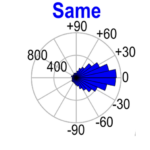
We have a very exciting paper just published in PLOS Biology. In it, we demonstrate a causal role for tiny microsaccadic eye movements in influencing peripheral neuronal sensitivity and behavior, thus resolving long-standing debates on the types of functional and mechanistic links that can exist between microsaccades and covert visual attention shifts.
More than two decades ago, we documented a very intriguing correlation between microsaccades, hitherto believed to be random artifacts of the oculomotor system, and covert shifts of visual spatial attention. While this discovery was replicated many times, and also investigated neurophysiologically, some fundamental questions remained, and it was never crystal clear how the correlation between microsaccades and covert visual attention shifts comes about. On the one hand, it could be that cognitive signals “leak” into the oculomotor system and give rise to microsaccades; and, on the other, it could be that microsaccades themselves play a causal role and are an integral component of the mechanisms of attention. The latter possibility is supported by our earlier demonstration that microsaccades are genuine motor outputs of the brain, which means that they can alter visual processing every time that they occur. Indeed, we previously found that attentional performance changes synchronize with microsaccade generation. Importantly, this latter possibility is of fundamental importance to consider, especially because it touches on the broader concept of embodiment, or the idea that perceptual and cognitive processes are a direct outcome of the organism’s behavioral repertoire.
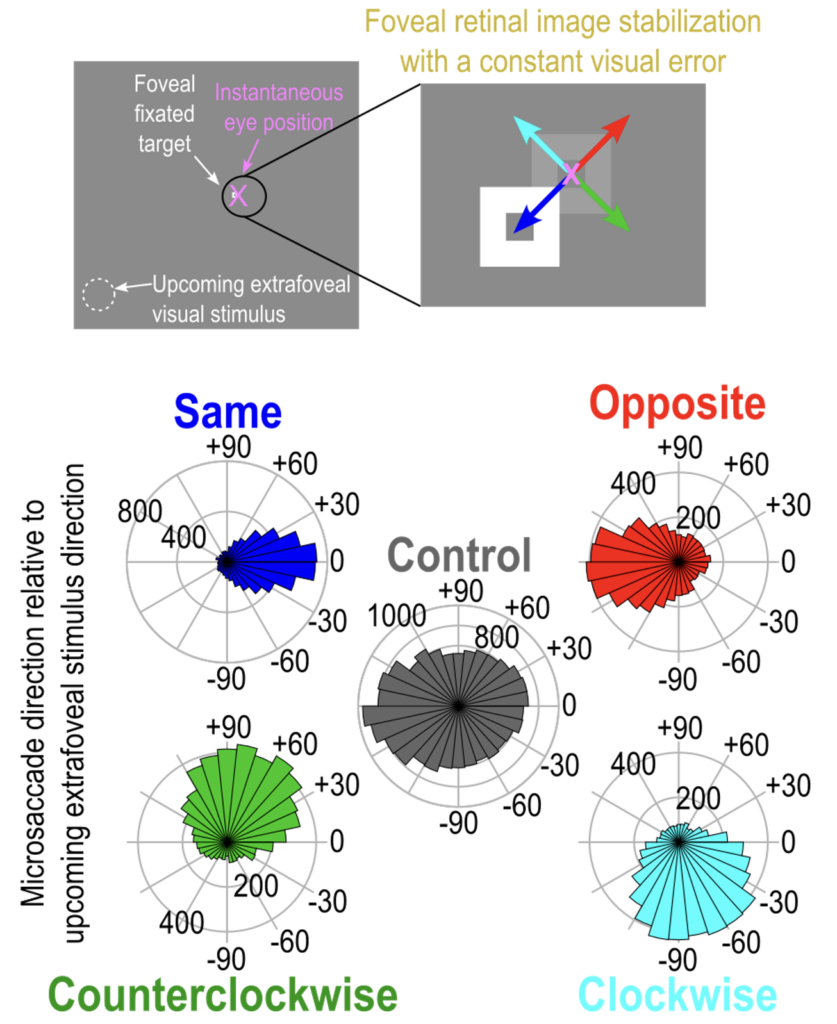
In our study, we took a highly unique and novel experimental approach, combining real-time retinal image stabilization of visual stimuli with behavioral and neuronal measurements of peripheral visual sensitivity. Specifically, we established both explicit as well as exclusive experimental control over only foveal neuronal and oculomotor states, and we found that this was entirely sufficient to cause peripheral performance and neuronal sensitivity changes that are identical to those expected from covert visual attention shifts.
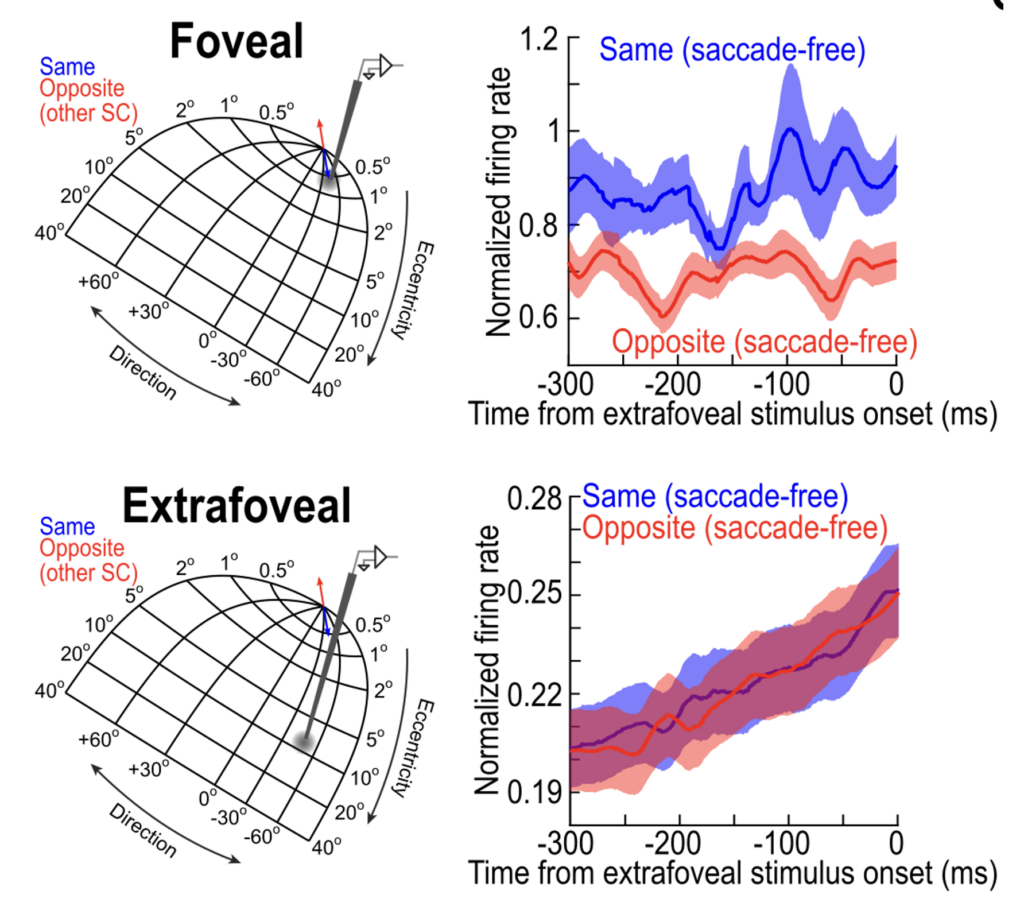
Our experimental manipulation of real-time retinal image stabilization allowed us to control the foveal representation of the superior colliculus (SC) before peripheral stimulus onset; we then checked whether peripheral visual sensitivity could be enhanced (at the time of peripheral visual stimulus onset) as a result of this foveal experimental control. Remarkably, we found enhanced visual responses, just like with covert visual attention shifts; the only difference is that our experimental manipulation was on foveal oculomotor control processes.
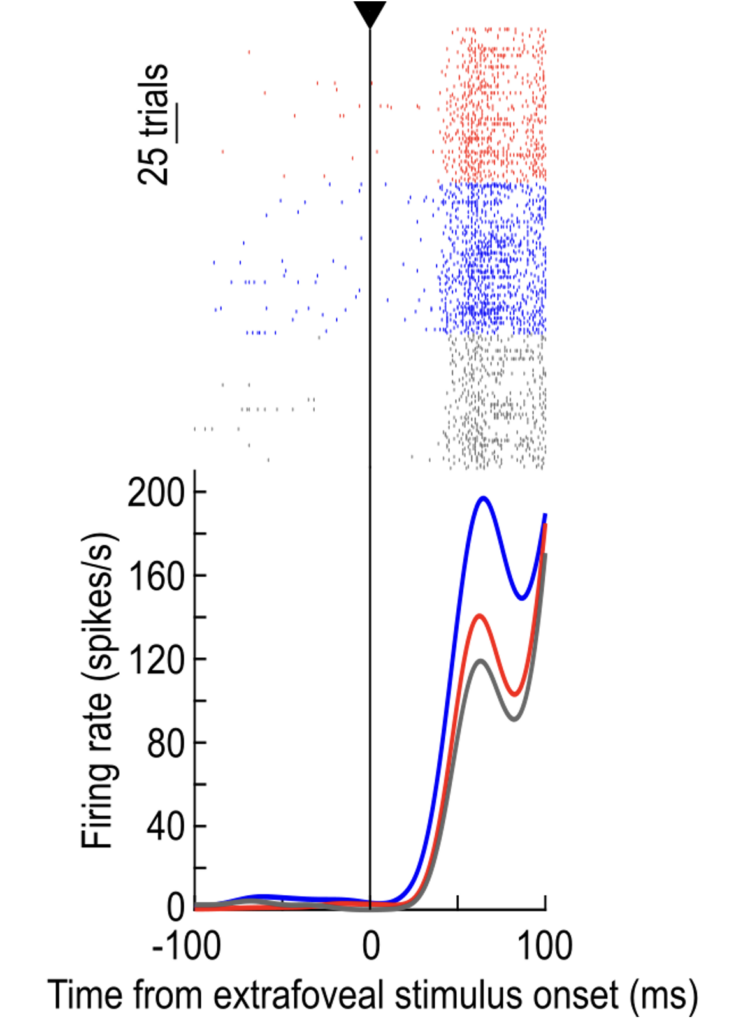
Most importantly, when we investigated how the enhancement came about, we learned something truly remarkable: the mechanisms underlying the impacts of microsaccades on peripheral visual sensitivity were essentially the same as those expected from the oculomotor generation of saccades in general; namely, the very well-known and classic peri-saccadic changes in visual processing and perception (mediated by processes like corollary discharge).
Thus, we now have an elegantly simple, yet mechanistically sound, explanation for when and how microsaccades may be thought to drive covert visual attention shifts.
Our results were also extended remarkably easily to human perceptual contrast sensitivity paradigms, which are a workhorse of covert visual attention experiments.
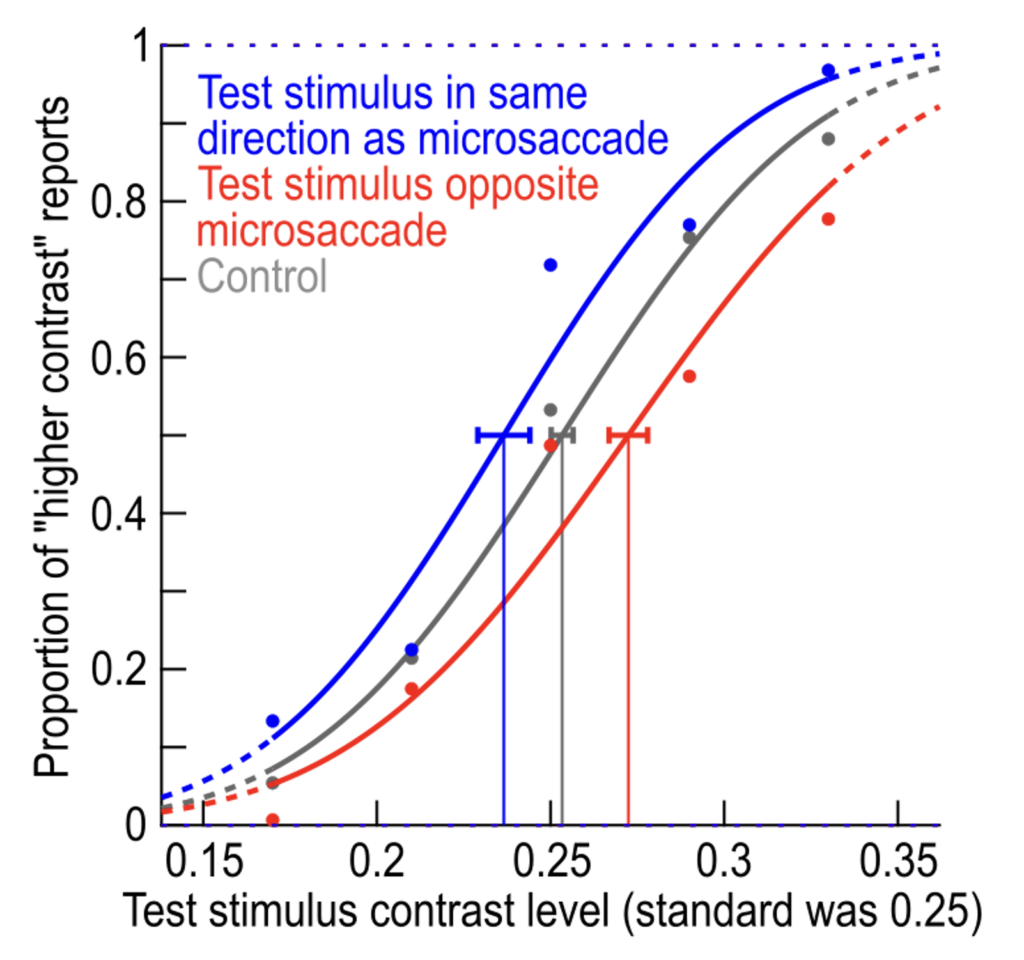
Our study brings closure to an observation about covert visual attention that we mentioned already in 2002, but never quite understood until now: that there were situations in the absence of microsaccades in which it could appear that there were no covert visual attention shifts at all!