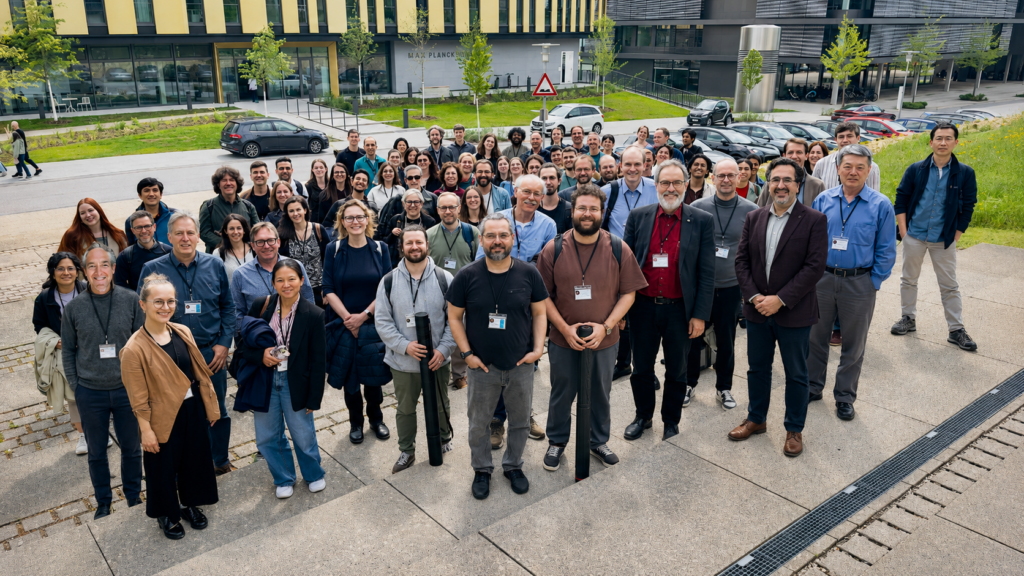
Our lab organized and participated in this year’s 15th Annual Primate Neurobiology Conference.
This conference represents a joint collaboration between Tübingen and our colleagues at the German Primate Center in Göttingen. Traditionally, the conference took place in Göttingen for one year and Tübingen for the next. However, this pattern was severely disrupted during the coronavirus pandemic, and while Göttingen already relaunched the conference a couple of years ago, this year’s event marked the relaunching of the Tübingen side. Thus, this was a very special occasion for us, and we look forward to hosting the conference once again in the future.
Our lab was actively present in the conference. We had three talks and several posters.
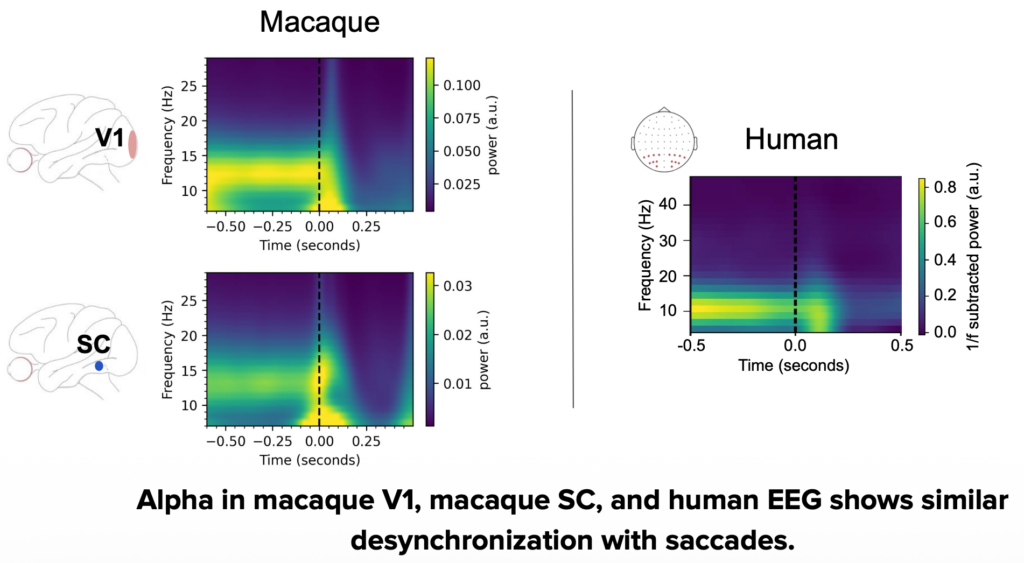
The first talk was by Aditya Chodhury, who is collaborating with us from Munich. In his talk, Aditya described our efforts to understand alpha oscillations in the superior colliculus (SC) and primary visual cortex (V1). We are finding very clear alpha oscillations in the SC, and also a clear desynchronization of alpha rhythms after saccades (in both the SC and V1). This is particularly relevant because the work in Aditya’s lab in Munich is showing how memory-related processes might simply reflect oculomotor-related modulations in alpha rhythms. This idea is reminiscent of our own work on the links between eye movements and attention, in the sense that both ideas are rooted in the concept that oculomotor control is very relevant for cognition.
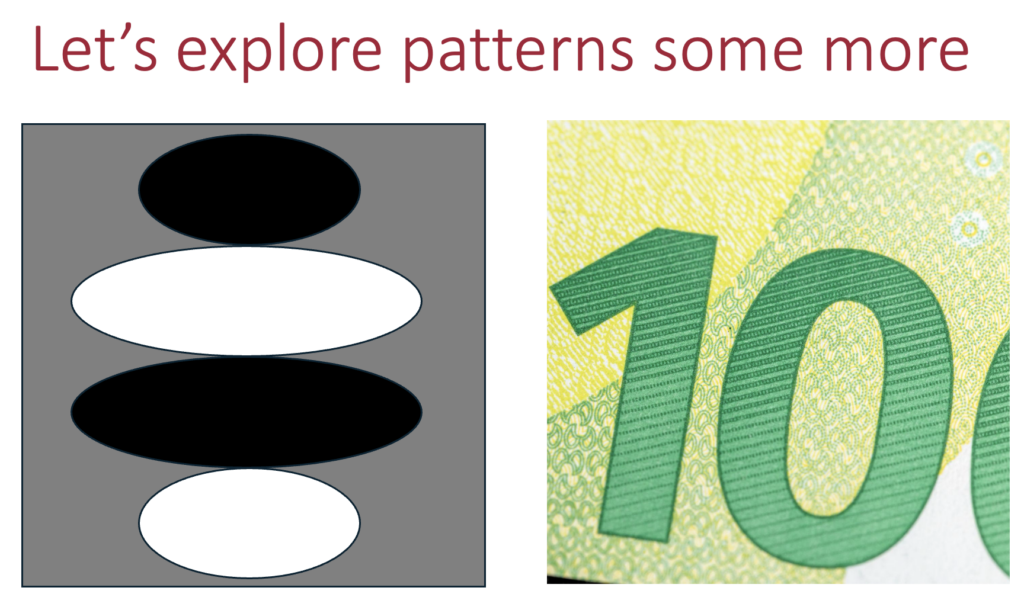
In the second talk from our lab at the meeting, Wenbin spoke about active vision in the SC and V1. He tried to relate the physiological findings that we have about saccadic suppression in the SC and V1 to human perception. And, he particularly investigated how dark and bright parts of patterned stimuli might be differentially processed across saccades. The results are quite intriguing and help us move towards understanding the full mechanisms underlying perceptual saccadic suppression.
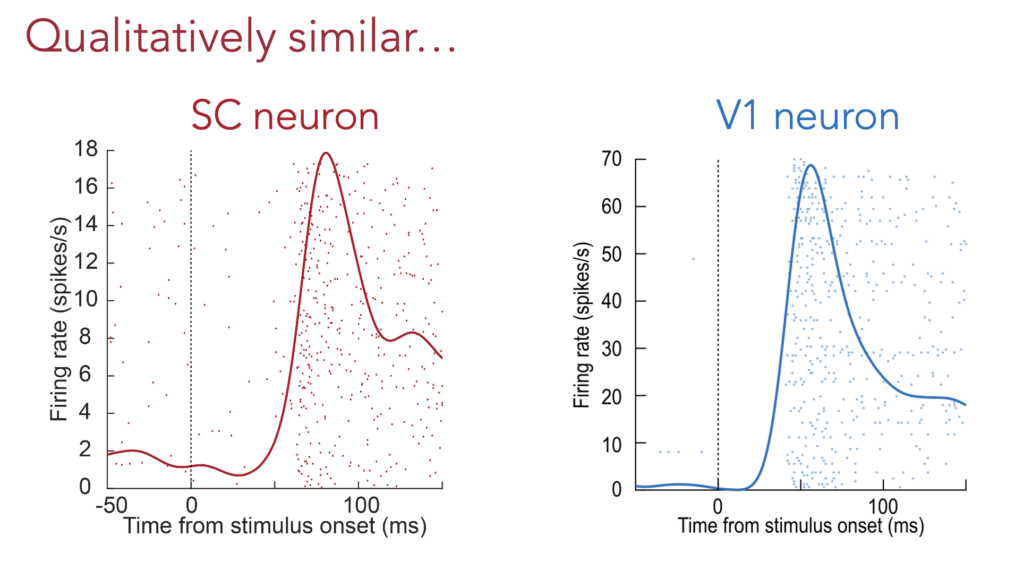
The third and final talk from our lab at this conference was given by Yue, and it was simply outstanding. In it, Yue continued her elucidation of the functional similarities and differences between visual responses in the SC and V1. She demonstrated how SC visual responses are the better predictors of eye movement timing, and she then explained how V1 visual responses are better suited for image analysis and perception. Thus, she is revealing how qualitatively similar visual responses in the two connected brain areas are actually quite different from each other, and particularly reformatted for the output recipient circuits of the two brain areas.
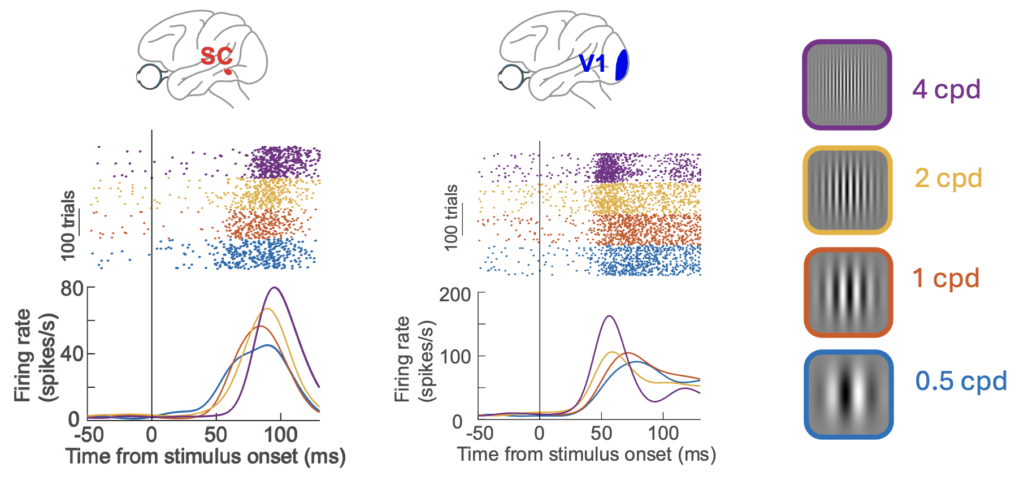
We also had several posters at the meeting, covering a wide range of topics. For example, Ekaterina’s poster was about the neural mechanisms of stimulus-evoked pupil diameter modulations, and Tanya’s poster was about the roles of geniculostriate versus alternative (e.g. retina-tectal) pathways in oculomotor behavior. Moreover, Maria presented our work on omnipause neurons in the brainstem, and Shweta explored the links between extracellular action potential waveforms and physiological function. Finally, Carlotta investigated contrast sensitivity functions in both the SC and V1 neurons.
We look forward to future editions of this interesting and focused conference.