
We have two exciting new publications just out, both on the neural mechanisms of saccadic suppression. These two papers are very special because they perfectly demonstrate the tremendous insights that one could make when considering conceptually similar neuroscientific phenomena across vastly different animal species.
The two papers describe results from a fruitful collaboration that we currently have with our colleagues in the lab of Aristides Arrenberg; these colleagues study zebrafish as the primary animal model for their research.
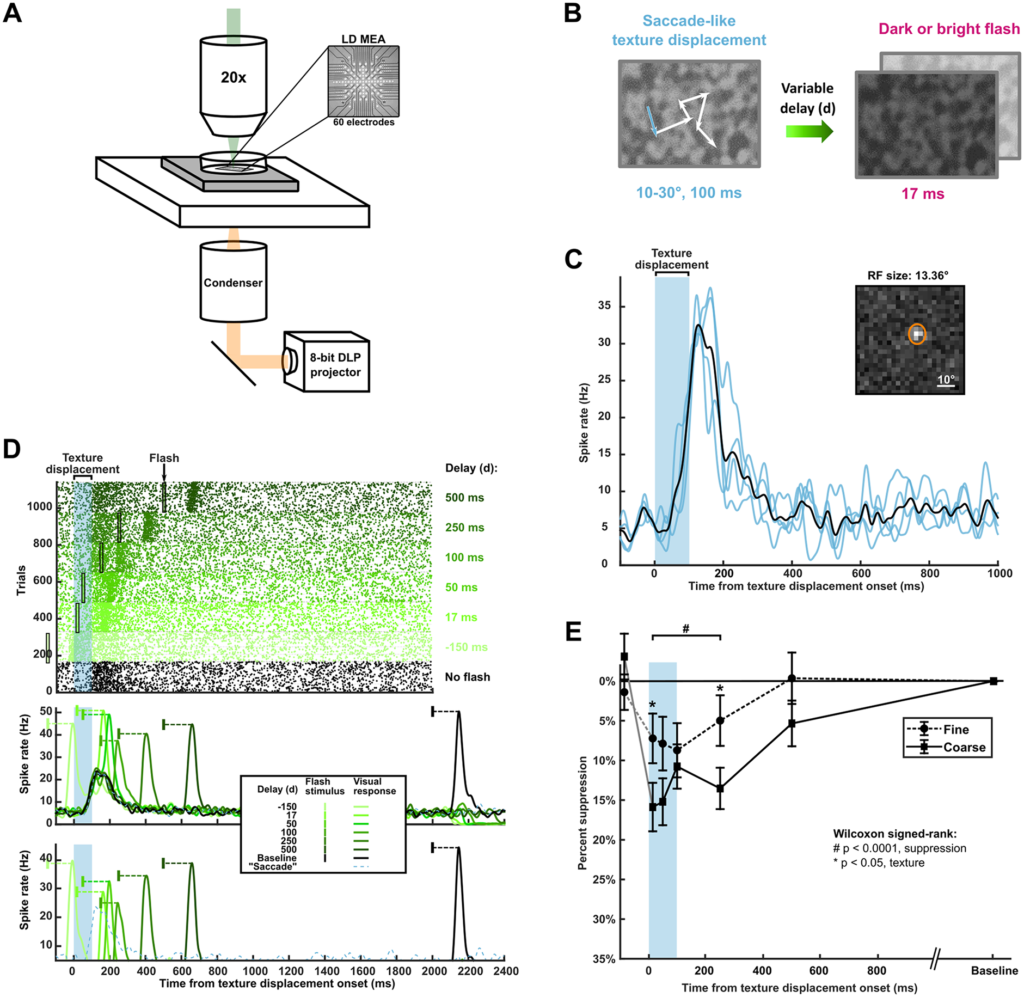
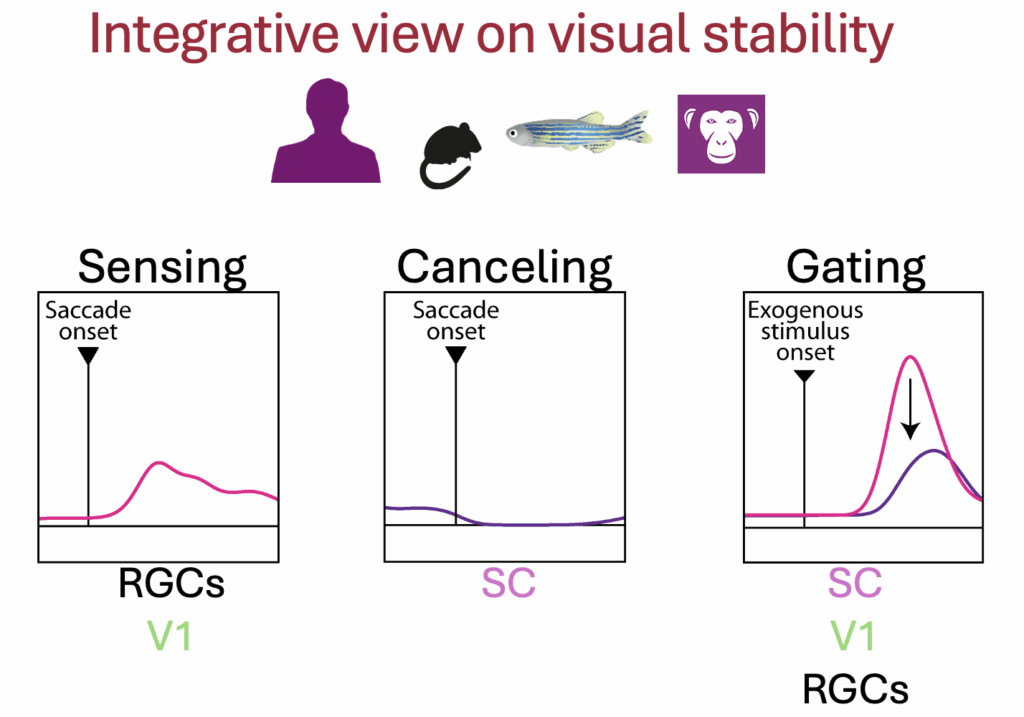
In one of the two studies, we first established the existence of saccadic suppression in the zebrafish by using a variety of approaches (including behaviorally). It all started with measuring responses in the zebrafish retina. By presenting saccade-like texture displacements to retinal cells, we could assess the sensitivity of these cells to luminance flashes occurring in the temporal vicinity of the texture displacements. The results indicated that visual sensitivity to the flashes was suppressed when the retina was experiencing image movies like those arising during saccadic eye movements. These results were remarkably consistent with those that we previously obtained (here and here) from the mammalian retina (in multiple different animal species). Thus, a visual origin of saccadic suppression is not only a robust finding, but it also starts in the very first station of visual processing (the retina), and across species as different from each other as zebrafish and primates!
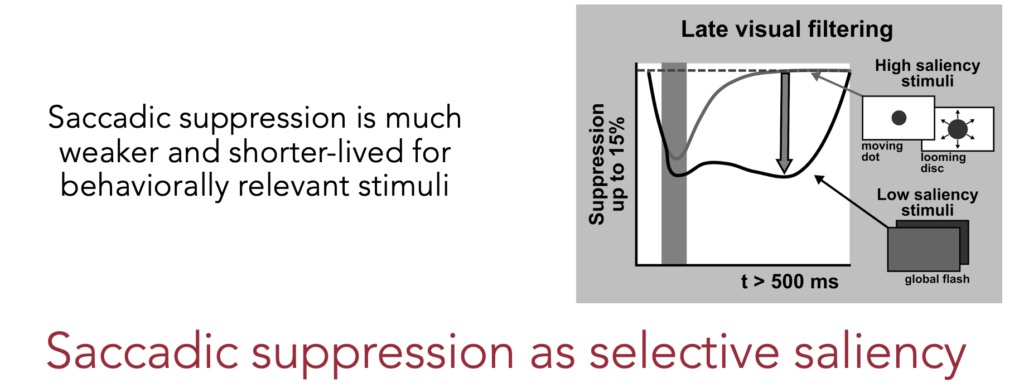
In the same study, we next turned our attention to the optic tectum of the zebrafish, a homologous brain structure to the mammalian superior colliculus, which we know exhibits strong saccadic suppression. The optic tectum of the zebrafish also exhibited saccadic suppression, indicating that the visual sensitivity suppression that we saw in the retina was associated with further changes in the central nervous system of the fish. Most importantly, the suppression in the optic tectum was stimulus-selective. Specifically, when the flashes that we introduced peri-saccadically were behaviorally relevant for the fish (e.g. mimicking prey stimuli or predator danger), saccadic suppression was weaker and much more short-lived. Thus, saccadic suppression has a selective component that may serve to enhance the saliency of specific types of behaviurally-relevant visual stimuli. Interestingly, in our ongoing primate work, we are also uncovering very intriguing selectivity properties of saccadic suppression, which were not previously appreciated, and which we are trying to understand. Thus, exploring saccadic suppression in the fish is illuminating some highly fascinating new perspectives for interpreting this perceptual phenomenon that has been well studied in primates for several decades.
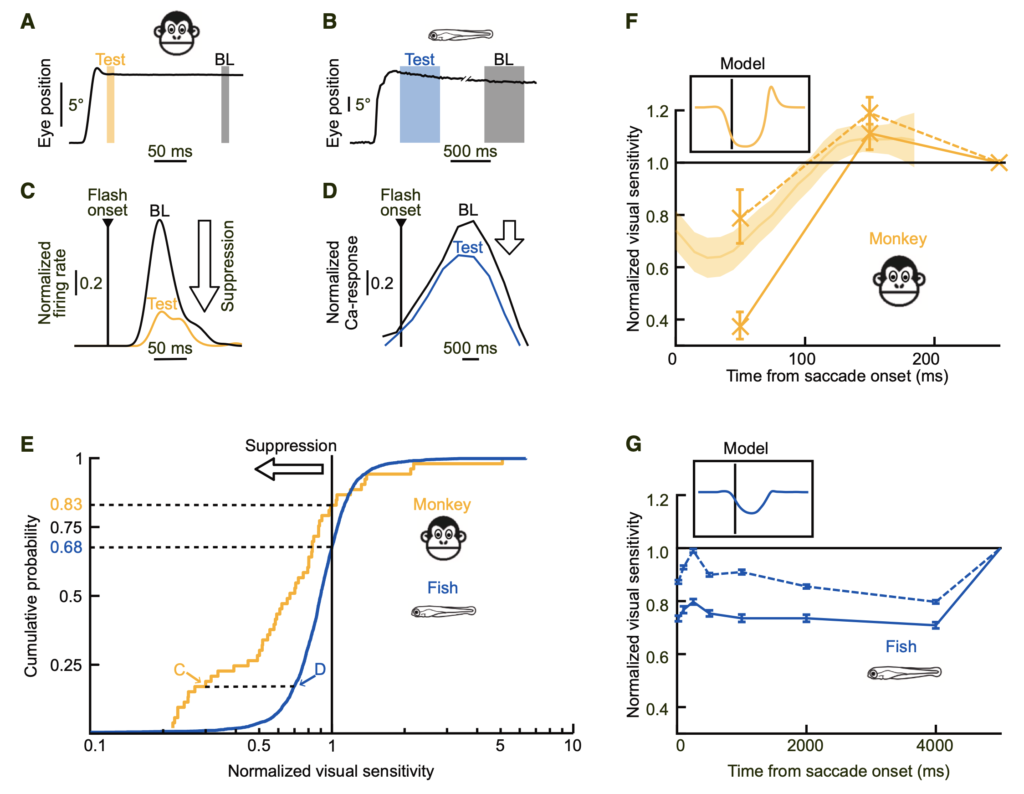
In the second study, we went one step further and directly compared saccadic suppression in primates and fish, using well-matched stimuli across all experiments. We recorded from the superior colliculus in the primates and the optic tectum in the fish. We found that the dynamics and amplitude of saccadic suppression differed quantitatively across the two species, but that the phenomenon was fundamentally the same across the two animal groups.
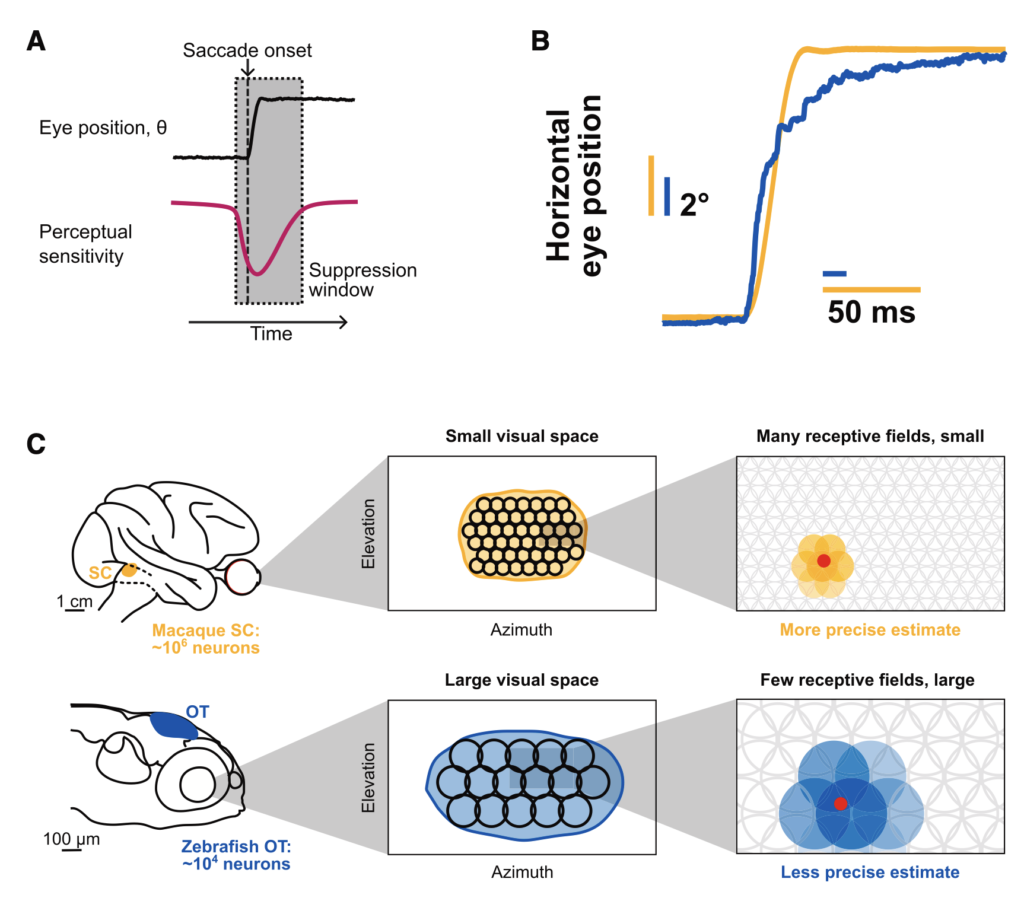
To better understand these quantitative differences that we observed experimentally in saccadic suppression between the fish and primates, we developed a computational model of saccade control, and we used it to estimate the strength of saccadic suppression. We found that running the model with the sensory and motor noise parameters of the fish explained their different metrics of saccadic suppression, relative to the primates. Thus, the same theoretical framework could explain the quantitative measures of saccadic suppression dynamics and strength across fish and primates. This is useful in order to understand the computational limits associated with saccadic suppression.
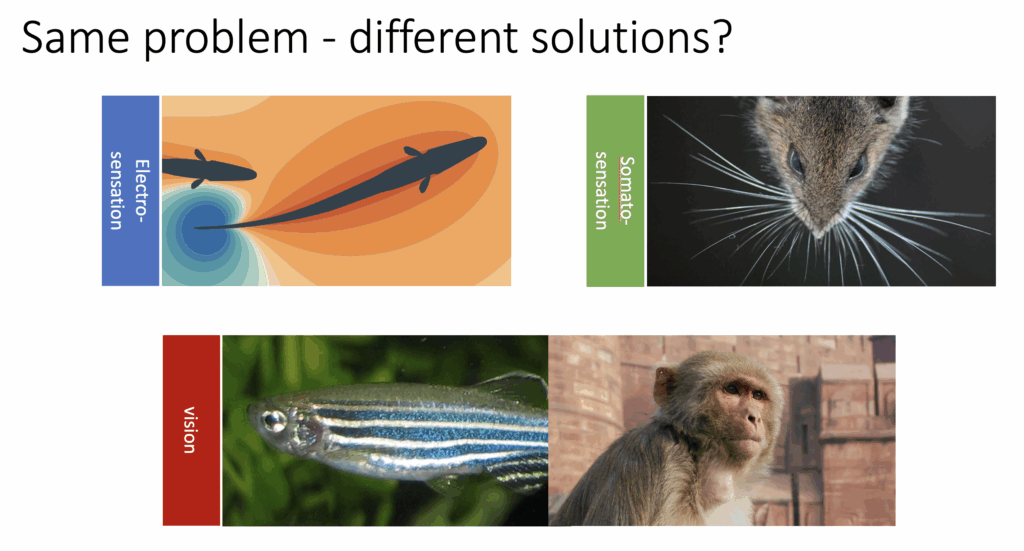
We are very excited about this line of work because it helps us to better understand fundamental problems about active vision that we have been deeply researching for the past two decades. We think that there is tremendous value in performing multi-species research, and the zebrafish results are only one aspect of such research – with other aspects including our past and future investigations in other animal models (such as mice) and sensory-motor modalities (such as somatosensation).
All of these efforts are possible, at least in part, because of generous support from the German Research Foundation (DFG) for the Special Priority Programme 2205 on Evolutionary Optimization of Neuronal Processing.