Our lab just participated in this year’s annual SPP2205 Retreat, which took place in Zeitz, Germany. The SPP2205 is a Special Priority Programme of the German Research Foundation (DFG), and it includes labs studying many different species, from insects to primates.
From Tübingen, besides our lab, the labs of Jan Grewe, Jan Benda, and Aristides Arrenberg were all part of the same SPP (and retreat), which was a tremendous opportunity for us to also collaborate with these labs locally. In this year’s retreat of the SPP, we had a perfect opportunity to showcase some of the fruits of such local collaborations.
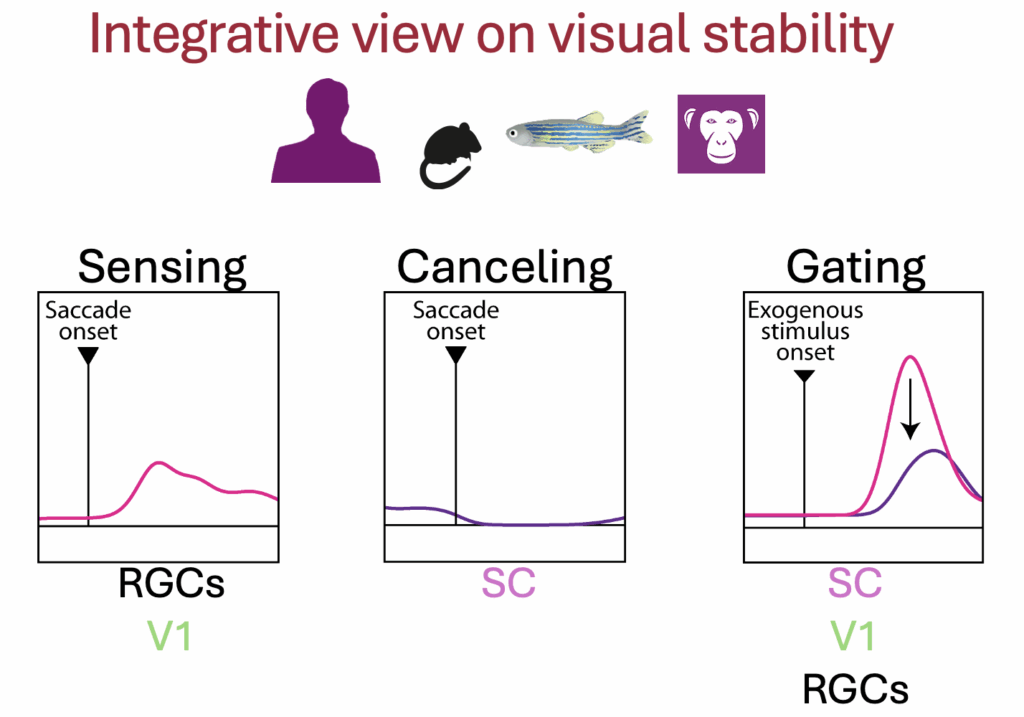
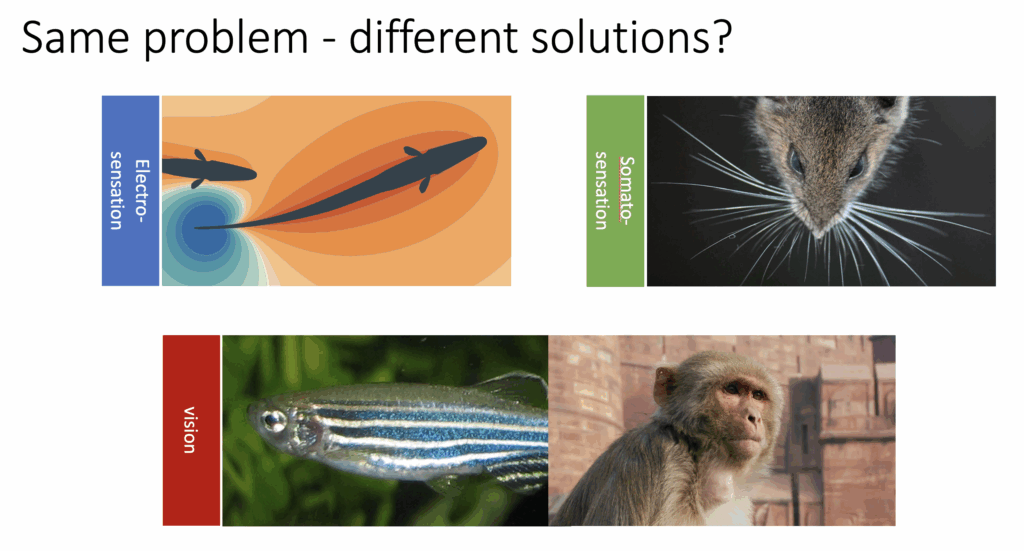
In one presentation at the SPP retreat, Jan Grew and Aristides Arrenberg described our recent joint review article/opinion paper on state estimation and sensory gating across multiple sensory modalities and multiple animal species. We were able to identify common problems and solutions in active sensing across fish, rodents, and primates and humans. We were also able to identify potential limits in some solutions of some species, as a function of the computational resources available in these individual species. For this SPP retreat, the presentation by Aristides Arrenberg and Jan Grewe was relevant because it suggested potential follow-up collaborative research initiatives after the end of the current SPP’s funding period. The presentation at the retreat was also relevant to announce and describe other original research articles that we wrote with the lab of Aristides Arrenberg on sensory gating (like here and here), which were directly motivated by our activities and collaborations in the SPP.

In the second presentation at the SPP retreat, Matthias gave a direct and practical example of the theoretical ideas presented by Aristides Arrenberg and Jan Grewe, this time by focusing on the visual system of primates. Matthias described results from the primary visual cortex (V1) and superior colliculus (SC) across rapid eye movements (saccades), and he linked these results to our previous and ongoing work in the mouse and zebrafish retinae, as well as the zebrafish optic tectum, and finally human perception. The talk by Matthias described approximately 5-7 years of extensive, hard work on saccadic suppression and saccadic omission, during which we learned a great deal about these fundamental phenomena in active perception. Stay tuned for the upcoming new papers that we are now writing about these exciting results that Matthias described!